Standing On THeir Shoulders – Alice Coachman

Standard

Alice Coachman 3Alice Coachman 2

Alice Coachman, first black woman to win Olympic gold medal dies
by Lilly Workneh

ALBANY, Georgia (AP) — The first black woman to win an Olympic gold medal, Alice Coachman Davis, died early Monday in south Georgia. She was 90.

Davis’ death was confirmed by her daughter, Evelyn Jones.

Alice Coachman 1

Davis won Olympic gold in the high jump at the 1948 games in London with an American and Olympic record of 1.68 meters, according to USA Track and Field, the American governing body of the sport. Davis was inducted to the USA Track and Field Hall of fame in 1975, and was inducted to the U.S. Olympic Hall of Fame in 2004.

“Going into the USOC Hall of Fame is as good as it gets,” she told The Associated Press in a 2004 interview. “It’s like Cooperstown, Springfield and Canton,” she said, referring to the sites of other prominent Halls of Fame.

Davis was the only American woman to win a gold medal at the 1948 games. According to Olympic historian David Wallechinsky, Coachman was honored with a 280-kilometer motorcade in Georgia when she returned from London. However, the black and white audiences were segregated at her official ceremony in Albany.

Recollecting her career in the 2004 interview, Davis speculated that she could have won even more Olympic medals, but the Olympics weren’t held in 1940 or 1944 because of World War II. She retired at age 25 after winning the gold medal in London.

“I know I would have won in 1944, at least,” said Davis. “I was starting to peak then. It really feels good when Old Glory is raised and the National Anthem is played.”

Davis attended Tuskegee University and also played basketball on a team that won three straight conference basketball titles. She won 25 national track and field championships — including 10 consecutive high jump titles — between 1939 and 1948, according to USA Track and Field.

Growing up in the deep South during the era of legal segregation, Davis had to overcome multiple challenges.

The New Georgia Encyclopedia says she was prohibited from using public sports facilities because of her race, so she used whatever equipment she could cobble together to practice her jumping.

“My dad did not want me to travel to Tuskegee and then up north to the Nationals,” Davis told the AP. “He felt it was too dangerous. Life was very different for African-Americans at that time. But I came back and showed him my medal and talked about all the things I saw. He and my mom were very proud of me.”

Davis won her first national high jump title at age 16 according to USA Track and Field, and worked as a school teacher and track coach after retiring. An elementary school in her home town is named in her honor and opened in August 1999 according to Dougherty County schools officials.

Vera Williams, a secretary at Meadows Funeral Home in Albany, said Meadows will be handling Davis’ memorial service, but plans haven’t been finalized yet. Davis’ cause of death was not immediately disclosed.

Copyright 2014 The Associated Press. All rights reserved. This material may not be published, broadcast, rewritten or redistributed.
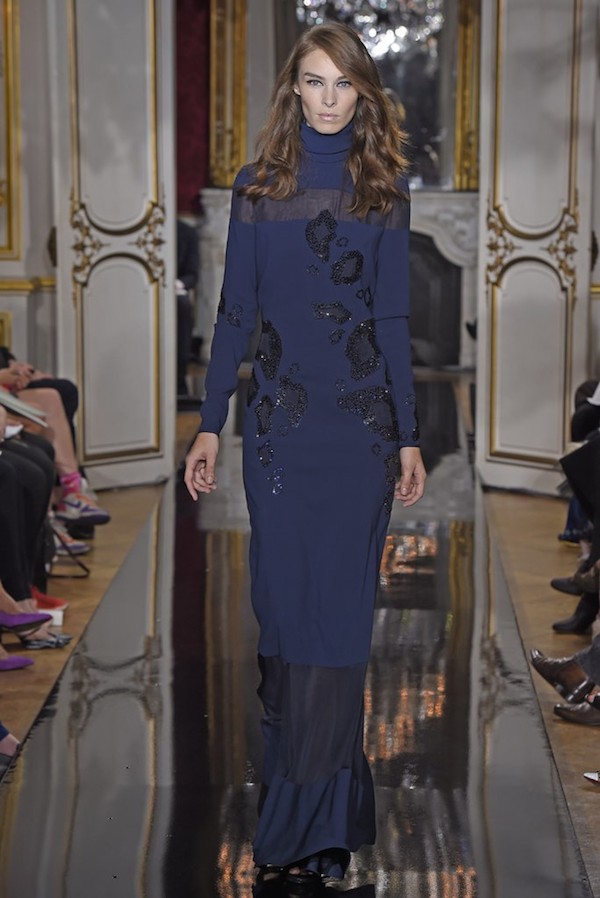
Loris Azzaro Couture Fall 2014 Collection

Standard

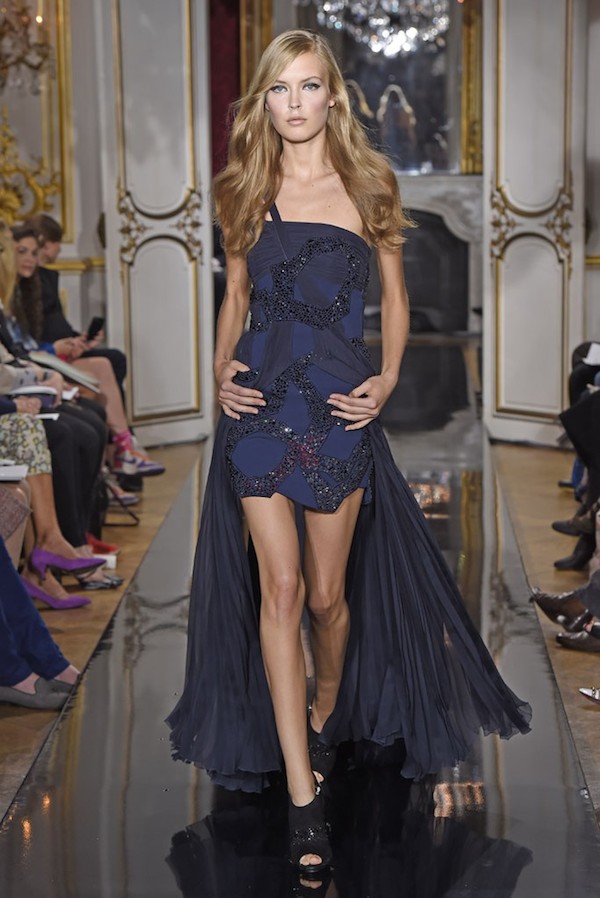
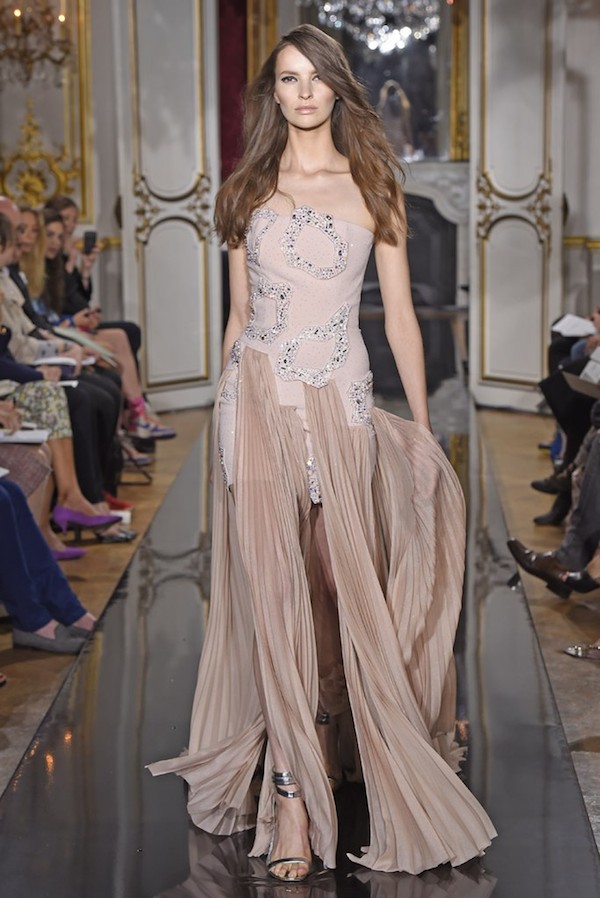
“It’s about this panther, this woman who comes out at night,” says Alvaro Castejón of the Loris Azzaro Couture Fall 2014 collection. Enjoy!

azzaro14 7azzaro11 9azzaro15 6azzaro24 3azzaro20 2azzaro09 10azzaro19 5azzaro26 1azzaro23 4

Credit: Style Pantry

RE2PECT

Standard

Thanks for the memories #DerekJeter!! Gotta loves those Yankees and my New York Days.

Derek Jeter is respected by everyone. Even a bitter rival, the Boston Red Sox. Derek Jeter is coming up on his final year in Major League Baseball, and heres a Respect tribute in honor of the Captain, #2 Derek Jeter.

Credit: Youtube

Work For Your Cause…

Image

Work For A Cause

Chocolate Toffee Matzo Crunch

Standard

This candy has a lot going for it: It’s economical, super simple to make, impressive to look at, and—oh, right— I totally almost forgot how irresistibly munchable it is. It’s perfect for any kind of potluck or get-together; make it for a dessert swap and watch it magically disappear before your eyes. Suggestion: Use plain, unsalted matzo (so you can put in the exact amount of salt you want), but use whichever kind you like. It can’t help but be delectable. (If you want to fancy this up, add your favorite toppings— like unsweetened coconut, which makes this an alternative to the tooth-jarringly sweet macaroons that are often available on the same shelf as the matzo.)

Chocolate toffee-matzoh crunch

Makes about 50 two-inch pieces

Ingredients

4 1/2 sheets unsalted matzo
1 cup packed light brown sugar
14 Tbsp. (1 3/4 sticks) unsalted butter
1 1/2 tsp. fine sea salt
6.5 ounces dark chocolate, chopped (1 cup)
1 Tbsp. fleur de sel or coarse sea salt, or 1/3 cup toppings such as slivered almonds, or chopped dried cherries, or unsweetened shredded coconut (optional)

Directions

1. Preheat the oven to 375°.

2. Place the matzo in a single layer on the prepared baking sheet, breaking it into pieces where necessary to fill the pan completely. Set aside.

3. Combine the brown sugar and butter in a medium size (4-quart) saucepan over medium heat. Stirring constantly with the heatproof spatula, bring to a boil, then continue to cook, still stirring constantly, until the mixture has thickened and is just starting to pull away from the side of the pan, about 3 minutes.

4. Remove the mixture from the heat and sprinkle in the fine sea salt, stirring well to incorporate it. Pour it over the matzo in the baking sheet, spreading it in an even layer with the spatula. Place the baking sheet in the oven and immediately turn the heat down to 350°.

5. Bake, watching to make sure it doesn’t burn, until the toffee bubbles up and turns a rich golden brown, 15 minutes. If it looks like it’s starting to burn, turn the heat down to 325°.

6. Remove the baking sheet from the oven and immediately sprinkle the chocolate over the hot matzo. Let it sit for 5 minutes, then spread the now-melted chocolate evenly with the spatula and sprinkle with the salt or your favorite toppings while the chocolate is still melted.

7. Allow the matzo to cool completely, 20 to 30 minutes, then break it into smaller pieces (roughly 2-inch square).

Sunday Reflections

Image

Matthew-628_Worry 2

Chocolate Glazed Chocolate Tart

Standard

Nothing better than chocolate and the weekend…

A triple layer of crumbly crust, a truffle-like interior, and an almost patent-leather-shiny glaze make this tart the chicest take on chocolate I’ve come across in a long time.

Chocolate Glazed Chocolate Tart

Yield: Makes 8 to 10 servings Active time: 30 min Total time: 2 3/4 hr (includes cooling)

Ingredients

For crust:
9 (5- by 2 1/4-inch) chocolate graham crackers (not chocolate-covered), finely ground (1 cup)
5 tablespoons unsalted butter, melted
1/4 cup sugar

For filling:
1 1/4 cups heavy cream
9 ounces bittersweet chocolate (not more than 65% cacao if marked), chopped
2 large eggs
1 teaspoon pure vanilla extract
1/4 teaspoon salt

For glaze:
2 tablespoon heavy cream
1 3/4 ounces bittersweet chocolate, finely chopped
1 teaspoon light corn syrup
1 tablespoon warm water

Equipment:
a 9-inch round fluted tart pan (1 inch deep)

Preparation

Make crust:
1. Preheat oven to 350°F with rack in middle.

2. Stir together all ingredients and press evenly onto bottom and 3/4 inch up side of tart pan. Bake until firm, about 10 minutes. Cool on a rack 15 to 20 minutes

Make filling:
1. Bring cream to a boil, then pour over chocolate in a bowl and let stand 5 minutes. Gently stir until smooth. Whisk together eggs, vanilla, and salt in another bowl, then stir into melted chocolate.

2. Pour filling into cooled crust. Bake until filling is set about 3 inches from edge but center is still wobbly, 20 to 25 minutes. (Center will continue to set as tart cools.) Cool completely in pan on rack, about 1 hour.

Make glaze:
1. Bring cream to a boil and remove from heat. Stir in chocolate until smooth. Stir in corn syrup, then warm water

2. Pour glaze onto tart, then tilt and rotate tart so glaze coats top evenly. Let stand until glaze is set, about 1 hour.

Chocolate Yummy

Standard

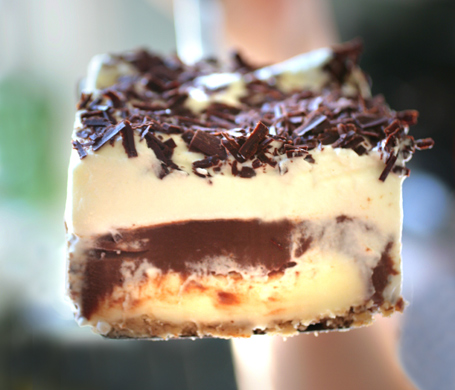
Chocolate Yummy might not be part of your dessert vernacular, but in Cajun Country, everybody knows what this dish is. The “yummy” architecture begins with a base of crumbled cookies (usually store-bought), followed by layers of sweetened cream cheese, chocolate pudding, and Cool Whip. This is the type of dessert that someone pulls out of the fridge after a big meal or cookout, and even when guests think they’re too full, they find themselves polishing off a portion of yummy.

Here is a grown-up version that’s a bit more sophisticated. It’s a rich pecan shortbread base topped with cream cheese, a silky pudding made with dark chocolate and fresh whipped cream.

Chocolate Yummy

Yield: Serves 6 to 8

Ingredients

Pecan shortbread
3 ounces pecans, toasted
3 tablespoons granulated sugar
1/2 cup (1 stick) butter
1/2 teaspoon vanilla extract
1 cup all-purpose flour
1/2 teaspoon salt

Chocolate pudding
1 cup heavy cream
1/4 cup granulated sugar
3 egg yolks
3 1/2 ounces dark chocolate, coarsely chopped
1 ounce milk chocolate, coarsely chopped
1 tablespoon butter
1/4 teaspoon vanilla extract
Pinch of salt
1 pound cream cheese
1/2 cup plus 2 tablespoons confectioners’ sugar
2 cups heavy cream
Chocolate shavings, for garnish

Preparation

1. Place the pecans and sugar in a food processor and pulse together for 30 seconds.

2. In the bowl of an electric mixer, cream together the butter, vanilla, and the pecan-sugar mixture, then stir in the flour and salt until just mixed. Chill the dough for 30 minutes.

3. Preheat the oven to 325°F.

4. Use your fingers to press the chilled dough into a 9-inch square baking dish. Prick the dough with a fork and bake 10 to 15 minutes, until lightly golden. Cool the cooked dough while preparing the remaining layers.

5. Heat the cream for the pudding in a heavy-bottomed saucepan over medium heat. Stir together the sugar and egg yolks in a mixing bowl. When the cream is hot (but not boiling), temper the cream into the yolks by slowly adding half the cream while stirring vigorously, then stir the egg mixture back into the cream in the saucepan. Cook over medium-low heat for 5 to 7 minutes, until it is thick enough to coat the back of a spoon.

6. Place the dark and milk chocolate in a mixing bowl with the butter, vanilla, and salt. Pour the hot cream mixture over the chocolate and stir until the chocolate and butter are melted. Spread the pudding in a shallow dish to cool and cover it with a piece of plastic wrap placed directly on the surface so a skin does not form.

7. In a small mixing bowl or the bowl of an electric mixer, beat the cream cheese and 1/2 cup confectioners’ sugar together until smooth.

8. In the bowl of an electric mixer, or by hand, whip the cream to soft peaks, then add the remaining 2 tablespoons sugar and whip a few minutes more, until stiff peaks form.

9. Spread the cream cheese over the cooled shortbread crust, top with the pudding, and then add the whipped cream. Refrigerate for at least 1 hour, or overnight. Garnish with additional chocolate shavings, if desired.

Standing On Their Shoulders – Helen Williams

Standard

Helen Williams_Model_PhotoGrid

A beauty throwback! In 1950s America Helen Williams became the first black female model to break into the fashion mainstream. Born in East Riverton, New Jersey in 1937, she was obsessed with clothes from an early age, and began sewing her own garments at the age of seven. As a teenager she studied dance, drama and art before getting a job as a stylist at a New York photography studio. While there she was spotted on separate occasions by Lena Horne and Sammy Davis Jr, who happened to be in the studio doing press shots. Struck by her beauty, they urged her to take up modeling. She was seventeen.

With her trademark bouffant wig, sculpted eyebrows and long, giraffe-like neck, she worked exclusively for African American magazines such as Ebony and Jet. These early years were tough, as not only did beauty’s apartheid system exclude all non-white models from mainstream fashion, but within the black modeling scene itself, the girls were required to be light-skinned, just like the African American chorus girls of the 1920s. “I was too dark to be accepted,” she recalled.

But that was America. The French, by contrast, held a very different view, and by 1960 she’d moved to Paris. “Over there I was ‘La Belle Americaine,’” she said. She modelled in the ateliers of designers Christian Dior and Jean Dessès. By the end of her tenure she was making $7,500 a year working part-time, and she’d received three marriage proposals from French admirers, one of whom kissed her feet and murmured, “I worship the ground you walk on, mademoiselle.”

After Paris she returned to America, where things had not changed at all for dark-skinned models. While searching for a new agent in New York City, she once waited two hours in the reception of one agency, only to be told that they had “one black model already, thanks.” But Williams never-say-die attitude meant that she would not take no for an answer. “I was pushy and positive,” she said. Undeterred at being rejected, the young beauty took her case to the press. Influential white journalists Dorothy Kilgallen and Earl Wilson took up her cause, drawing attention to beauty’s continuing exclusion of black models. This opened things up for Williams, who was then booked for a flurry of ads for brands such as Budweiser, Loom Togs and Modess, which crossed over for the first time into the mainstream press, in titles such as The New York Times, Life and Redbook. By 1961 her hourly rate had shot up to $100 an hour. Fashion’s lily-white membrane had finally been breached.

It was a pivotal moment for black beauty, as Williams’s success broke the tradition for only using light-skinned models. “Elitists in our group would laugh at somebody if they were totally black,” said model-turned-agent Ophelia DeVore. “And when she [Williams] came along she was very self-conscious because she was dark. She gave people who were Black the opportunity to know that if they applied themselves they could reach certain goals.” Williams was the first beauty to break the four hundred year chain that had branded dark skin as ugly. The same dark skin that was rendered second-class during slavery, that the minstrels once ridiculed, and that had relegated Hollywood’s actors to roles as servants and clowns, was suddenly beautiful.

Credit: Lipstick Alley

Over The Hump Old School Sound Check – Bobby Womack

Standard

Robert Dwayne “Bobby” Womack (March 4, 1944 – June 27, 2014) was an American singer-songwriter and musician. An active recording artist since the early 1960s, when he started his career as the lead singer of his family musical group the Valentinos and as Sam Cooke’s backing guitarist, Womack’s career spanned more than 50 years and spanned a repertoire in the styles of R&B, soul, rock and roll, doo-wop, gospel, and country.

Womack wrote and originally recorded the Rolling Stones’ first UK No. 1 hit, “It’s All Over Now” and New Birth’s “I Can Understand It” among other songs. As a singer he is most notable for the hits “Lookin’ For a Love”, “That’s The Way I Feel About Cha”, “Woman’s Gotta Have It”, “Harry Hippie”, “Across 110th Street” and his 1980s hit “If You Think You’re Lonely Now”.