Category Archives: TENACIOUSMformation

5 Leadership Lessons Pope John Paul II Taught A Young Swiss Guard

Standard

Here is an interesting perspective on leadership that I recently came upon and wanted to share.

By Carmine Gallo
Reposted from Forbes.com

How many of us can say our former boss was a ‘saint’ and mean it, literally? On Sunday, April 27th Andreas Widmer will be among the millions expected to attend the canonization of Pope John Paul II. Unlike most of the others, however, Widmer holds an especially close relationship to the pontiff. John Paul II was Widmer’s boss.

On Christmas Eve in 1986 Widmer was pulling his first duty as a newly recruited Swiss Guard assigned to protect the pope. When the pope emerged from the papal apartment on his way to celebrate midnight mass he saw Widmer at his post. Widmer was young, homesick, unsure of himself, and depressed about spending his first Christmas away from his family, although he never told anyone. John Paul approached and said, “Of course! This is your first Christmas away from home. I appreciate the sacrifice you’re making for the Church. I’m going to pray for you as I celebrate mass tonight.”

As Widmer reflects on that exchange, he recalls that none of the other guards—his friends—had noticed his anguish that night. Only the one person who would serve one billion Catholics paid special attention to him. It was at that moment that Widmer learned the true meaning of servant leadership. I met Widmer about eighteen months ago and was fascinated at how he applied the lessons he learned from his day to day interactions with John Paul II to his business career and, today, as the Director of Entrepreneurship Programs at The Catholic University of America in Washington, D.C. I caught up with Widmer before he left for Rome to talk about the legacy that Pope John Paul II leaves every leader who, regardless of faith, hopes to inspire his or her team to achieve excellence.

5 Leadership Lessons Pope John Paul II Taught A Young Swiss Guard

Encourage people to dream big and to keep their eyes on the long term. “John Paul always took the perspective of my whole life into consideration when talking with me. I think this was rooted in his experience as a university chaplain. Once, he stopped to talk to me. He wanted to know how I was doing and how I liked being a Swiss Guard. I told him about my concerns and worries, which were all focused on the short term. He helped me turn these short-term issues into a long-term vision for the rest of my life.” According to Widmer the pontiff always pushed him to reach for loftier goals and not to settle for mediocrity. “He encouraged me to think big.”

Be fully present for every conversation. “Every time I talked with John Paul, even if it was just passing by to say hello, he made me feel like I was the reason he got up that morning.” Recall Widmer’s first encounter with his new boss on Christmas Eve. Widmer said he was miserable and ready to quit. He thought he had made a huge mistake in signing up for the Swiss Guard. When the pope walked out of his apartment, he could have simply walked by Widmer. “But he did not just pass. He stopped and noticed that I was distraught and even identified the true reason for it. He had the keen ability to notice things in the moment, the true feeling of people he encountered.”

John Paul made people feel special because he was present. This is a very common trait of inspiring leaders. Employees who tell me they work for inspiring leaders nearly always say their boss makes them feel as though they are the most important person in the room and that their boss genuinely cares about their well-being.

Show people that you believe in them. “John Paul had more faith in me than I had in myself,” says Widmer. “This built up my self-esteem and allowed me to achieve more than I would have ever thought possible. He believed in me first, even before I believed in myself.”

Inspiring leaders believe in people, often much more strongly than those people believe in themselves. One of the most inspiring leaders I’ve had the pleasure to interview was a school teacher. Ron Clark was Disney’s Teacher of the Year in 2000. There was even a made-for-TV movie about his experience. Clark’s claim to fame was taking a class of underachieving fifth graders in Harlem and, in one school year, giving them the skills to outperform the gifted class in the end-of-year test. Clark told me that he set high expectations for the students. Clark didn’t tell the students they were going to perform at their class level by the end of the school year. He told them they would outscore the so-called “gifted” class. Once they believed in themselves, the sky was the limit.

View “work” not as a burden, but as an opportunity. According to Widmer, “John Paul II talked about work not in terms of a ‘burden,’ but in terms of an opportunity to become who we are meant to be. He felt that work is what made us fully human.”

John Paul believed that when we work we don’t just make more; we become more. In his encyclical work, “Laborem Exercens,” the pope wrote, “Work is a fundamental dimension of man’s existence on earth.”

Celebrate entrepreneurship. John Paul celebrated entrepreneurs because to create something out of nothing is fundamental to spirituality. Just as believers have faith in their creator so to must entrepreneurs have faith in their vision, faith in their team’s ability to execute on the vision, and faith that what they set out to accomplish is connected to something bigger than themselves.

John Paul convinced Widmer that entrepreneurship was a magnificent path upon which to build his life, a path where he could use his own gifts, talents, and ideas to uncover his full potential and to participate in the work of creation.

Do One Thing

Standard
Do One Thing

“Do one thing… Stop being miserable and start being alive. “

goldfish's avatarFish Of Gold

How am I not dead yet? That’s a completely reasonable question for any humanoid considering the crapshoot that is life. You could be peacefully sleeping at home when a mountain crashes through your bedroom. You could go on a trip where your plane disappears, your bus gets hit by a truck or your ferry capsizes.

What I’m saying is, a lot of shit can happen and it’s a damn miracle that any of us are still breathing, especially people in their 90s and above. Imagine the sheer luck it would take to have your crappy human body survive for a hundred years or more with you still in it.

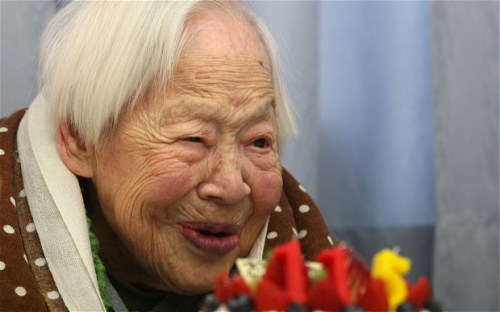
Misao Okawa, world's oldest person, 116 years, bitches. Misao Okawa, world’s oldest person, 116 years, bitches. (Getty Images)

High five, Misao! She said her secret to longevity is eating and sleeping a lot. “Eat and sleep and you will live a long time. You have to…

View original post 661 more words

SLAVES TO SPINNING ALONG THE BLACKSTONE:

Standard

For history buffs, this is a great read and a necessary repost. Thanks Marilyn!

Marilyn Armstrong's avatarSerendipity - Seeking Intelligent Life on Earth

Today is Patriot’s Day. Here in Massachusetts, this day commemorates — and re-enacts — the battles of Lexington and Concord and the beginning of our Revolutionary War. And we have a marathon too … in Boston.

But this post is about the other  revolution — the American Industrial Revolution — which took place around the same time … and had perhaps even more profound effects on our world.

America: Born Bankrupt

America was born bankrupt. We won the revolution, but lost everything else. Our economy was dependent on Great Britain. We produced raw material, but Great Britain turned those materials into goods for the world’s markets.

Battle of Lexington and Concord revolution

Not merely did we depend on the British to supply us with finished goods we could not produce ourselves, we depended on British banks, British shipping, and British trade routes.

Everything has a price and we had no money. We had hoped we could reach an agreement with England…

View original post 1,964 more words

Standing On Their Shoulders – Percy Lavon Julian

Standard

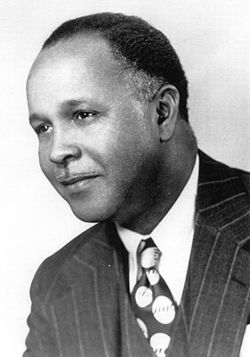
Today would be Julian Percy’s 115th birthday. I celebrate his legacy and the accomplishments he made during a time when African Americans seldom received credit for their work.

Percy Lavon Julian

Percy Lavon Julian (April 11, 1899 – April 19, 1975) was a U.S. research chemist and a pioneer in the chemical synthesis of medicinal drugs from plants.[1] He was the first to synthesize the natural product physostigmine, and a pioneer in the industrial large-scale chemical synthesis of the human hormones progesterone and testosterone from plant sterols such as stigmasterol and sitosterol. His work laid the foundation for the steroid drug industry’s production of cortisone, other corticosteroids, and birth control pills.

He later started his own company to synthesize steroid intermediates from the Mexican wild yam. His work helped greatly reduce the cost of steroid intermediates to large multinational pharmaceutical companies, helping to significantly expand the use of several important drugs.

Julian received more than 130 chemical patents. He was one of the first African-Americans to receive a doctorate in chemistry. He was the first African-American chemist inducted into the National Academy of Sciences, and the second African-American scientist inducted from any field. Credit: Wikipedia

Why failing is (kind of) a good thing

Standard

I am such a fan of Christian Mihai and this post will help you understand why I feel this way. People are often so afraid of failure that they are forced to accept a life of mediocrity. We need to embrace our missteps to learn and to fortify our self esteem. We fortify our self esteem through personal success and realizing goals which, believe me, take a fair amount of failures. Courage…

You Are Amazing!

Standard

Happy Saturday to all! It’s the weekend and we should take time to reboot and recharge. I will be searching for chocolate ideas so stay tuned…

You are Amazing

Owning Fear

Standard

One of my favorite bloggers in the blogosphere is Cristian Mihai. He is excellent writer because he is honest and just puts it all out there. I wanted to repost the following article in hopes that it will reach and inspire others as it did me.

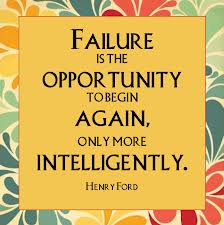
I have come to believe that failure and success are a numbers game. You can’t accomplish success without meeting a certain quota of failures. Once you embrace this concept, failure is way less scary. It simply becomes another hurdle on your way toward your dreams.

Fear of Failure

Repost: Success. Fear. And stuff.
by Cristian Mihai

Most people like to believe talent, hard work, and luck are among the determining factors of success. For a long time I thought you only need two of them.

But, actually, if you want to be successful, and it doesn’t matter if all you want is to become a great dancer or actor or writer, or whether you want to pick up pretty girls in bars, you just have to be willing to make a fool out of yourself.

Let me tell you why. Making a fool out of yourself is even worse than failing, because our freedom is ultimately limited by what others think about us. For some, seeing their own failure reflected in the eyes of those around them is worse than the death penalty.

Because we’re social creatures disgrace feels like the most terrible of punishments. No man is an island. For whatever reason, we want to belong, we want to find others just like us, and thus we are afraid of being rejected. Furthermore, we are afraid of what consequences our actions might bring.

Some try to play it safe. Their heads bowed, they try to survive for as long as possible. For them, life’s just the battle of staying alive until they die, and every day they wake up and look themselves in the mirror, that’s a day they’ve already given up on.

In order to succeed you have to be willing to fail, and I could leave it at that, go back to writing my stories, and you’d feel like you know something. Instead, I’m going to tell you what “being willing to fail” actually means: it’s one of the scariest things you’ll ever do in this life.

You know that really famous quote from Hemingway’s The Old Man and The Sea?

“A man can be destroyed but not defeated”.

I’ve always thought it to be exactly the opposite. A man can (and will) be defeated. Countless times, actually. Painfully, mercilessly so at times. But he can never be destroyed.

Life’s all about failing, over and over again, and rising up every time we fail. And it’s all right to be afraid. Fear is a natural response, but not understanding fear is not.

Dreams don’t come true, you have to make them come true, you have to start things, you have to finish them, you have to search and try and work really hard at it. No matter how afraid you are, no matter how easy it seems to just give up, you have to keep going.

And I’m not talking just about writing or art. No, this is about life, about love, about being the person you want to be.

We live in a strange world. You’ve got billions of people, and they’re all different, and they all want what they want, and they’re all fighting to get it. All these dreams, all living at once on the same planet.

At times it might seem like a good idea to wait. Just put your dreams on hold.

I’ve met so many people who know what’s that one thing they want most, and they do something else regardless. Apparently, they want to wait for the right time… some of them want to earn enough money by doing something else, then spend the rest of their lives doing that which they’re passionate about.

But it rarely works that way.

There is only one battle worth fighting: spend every second of your life searching for the spark that makes you feel alive. There’s no other fight quite like it. You fail, and it doesn’t matter. The entire world thinks you’re pathologically unstable, and it doesn’t matter. You receive 200 rejection letters from agents, you keep on writing. Reach for the stars and don’t whine when you fall on your ass.

Success comes to those who fight wars they believe in. With a million strangers at their side or all on their own, there’s nothing quite like going through life with your head held high.

***

Leadership, Solitude and Thinking

Standard

When I came across this article it actually seemed like an oxymoronic title. But as I read it in detail, I was sold. As a writer, I am compelled to spend countless hours alone either thinking of ideas or actually converting those thoughts into readable form. Now, it turns out that the same approach is probably the best way for me to address my management style. My dad and mentor used to tell me not to discuss my problems with anyone who was not in a position to help me solve them. And he was right. He wanted me to think for myself and know who I am in any given situation. Turns out that’s an imperative trait for any leader.

Repost: BEN J. CHRISTENSEN favorite quotes from Solitude and Leadership: an article by William Deresiewicz | The American Scholar

Greece Silver Island Yoga Retreat

“solitude is one of the most important necessities of true leadership”

“what I saw around me were great kids who had been trained to be world-class hoop jumpers. Any goal you set them, they could achieve. Any test you gave them, they could pass with flying colors. They were, as one of them put it herself, ‘excellent sheep.’”

“excellence isn’t usually what gets you up the greasy pole. What gets you up is a talent for maneuvering. … Not taking stupid risks like trying to change how things are done or question why they’re done. Just keeping the routine going.”

“We have a crisis of leadership in this country, in every institution.”

“We have a crisis of leadership in America because our overwhelming power and wealth, earned under earlier generations of leaders, made us complacent, and for too long we have been training leaders who only know how to keep the routine going. Who can answer questions, but don’t know how to ask them. Who can fulfill goals, but don’t know how to set them. Who think about how to get things done, but not whether they’re worth doing in the first place. What we have now are the greatest technocrats the world has ever seen, people who have been trained to be incredibly good at one specific thing, but who have no interest in anything beyond their area of exper tise. What we don’t have are leaders.

What we don’t have, in other words, are thinkers. People who can think for themselves. People who can formulate a new direction: for the country, for a corporation or a college, for the Army—a new way of doing things, a new way of looking at things. People, in other words, with vision.”

“there are a lot of highly educated people who don’t know how to think at all.”

“what makes him [General David Petraeus] a thinker—and a leader—is precisely that he is able to think things through for himself. And because he can, he has the confidence, the courage, to argue for his ideas even when they aren’t popular.”

“true leadership means being able to think for yourself and act on your convictions”

“people do not multitask effectively. And here’s the really surprising finding: the more people multitask, the worse they are, not just at other mental abilities, but at multitasking itself.”

“Multitasking, in short, is not only not thinking, it impairs your ability to think.”

“You do your best thinking by slowing down and concentrating.”

“Leadership means finding a new direction, not simply putting yourself at the front of the herd that’s heading toward the cliff.”

“Once the situation is upon you, it’s too late. You have to be prepared in advance. You need to know, already, who you are and what you believe: not what the Army believes, not what your peers believe (that may be exactly the problem), but what you believe. How can you know that unless you’ve taken counsel with yourself in solitude?”

Why Leadership Is About Dignity

Standard

As most of my followers know, I am always looking for guidelines and information about leadership that make sense to me. I came across the following submission and had to share it. If you are a leader in your family, community or at work, I think you will gain some insight from this take on leadership and dignity. I know I did.

Quotation-Steve-Maraboli-life-humor-people-drama-inspirational-spirit_2

Repost: Denise Restauri, Contributor
Forbes.com

“A bold new way of tackling poverty that’s about dignity, not dependence and choice, not charity.” When I first read that on Acumen.org, I thought beyond poverty. I asked myself, “If dignity is about being worthy of honor and respect, what role does dignity play in leadership?”

To find the answer, I went to three Acumen Global Fellows from the class of 2013 – three women in their 20’s who are the next generation of social impact leaders, a new kind of leader who sees the world as it is and knows she can be a part of the solution that creates lasting impact on the ground. A one-year fellowship, 10-12 individuals from all over the world spend two months in New York undergoing intensive leadership training, followed by nine months working with one of Acumen’s portfolio companies in India, Pakistan, East Africa or West Africa. It’s not about sitting around and talking about the problems, it’s about taking action. It’s about leading.

These three Fellows will share their stories with us over the next few weeks. They are from three different countries: United States, Japan and China. They had three distinct experiences. And they all had major learnings about leadership and dignity:

1) Recognize human dignity. Each one of these women started with a goal to recognize and support human dignity. None of them wanted to help people that they felt sorry for, but rather, be part of a solution that recognizes the dignity in all people. That’s empowerment.

2) Do what’s right, not what’s easy. All of them learned by doing, combining their hard skills with new lessons about how to build trust and support teams to have an impact on the ground. It wasn’t easy and sometimes they couldn’t see the light at the end of the tunnel, but they kept moving forward with great integrity and intent.

3) Share the shining star. Each of them saw as their greatest lesson the need to collaborate with the people closest to the ground doing the unglamorous work of execution, day after day. It was not about being a shining star, proving what they could achieve, demonstrating their abilities. It always boiled down to their ability to listen to and learn from the teams they worked with and help them be shining stars.

4) Leadership is a muscle. Leadership is a muscle that needs to be trained and exercised in real life. The lessons they learned, how they overcame challenges, admitted to and fixed their mistakes – those learnings far outweighed the leadership lessons they learned from books.

Black History Month Salute – Tina Turner

Standard

Black History Tina Turner

Tina Turner has long been one of my role models. Born in Nutbush, Tennessee in 1939, international superstar Tina Turner (née Anna Mae Bullock) moved to St. Louis in her teen years and from there she left for California. Although Tina lived in the Los Angeles area for about 25 years, in 1986 she moved to Europe and has lived there since. Living first in London, she later moved with her then boyfriend (current husband) to Cologne, Germany.

Tina formally filed paperwork with the U.S. Embassy in Bern, Switzerland on October 24, 2013 to relinquish her United States citizenship, declaring that she “has no plans to reside in the United States in the future.” But before she lived in Switzerland full time, Tina divided her time between Zurich and Nice, France at the French Côte d’Azur. Just like countries everywhere in the world, France adores Tina.

Photo 1: Tina Turner, Paris, 1984: “Tina’s fantastic. She’s one of the best, original entertainers [and] performers in rock ‘n’ roll, in the world. I actually just happened to be in Paris, found out Tina was there shooting a video and went and met her there. It’s kind of great, because Tina’s such a classy lady. To have a picture of her in Paris in front of the Eiffel Tower is just kind of a natural, because she is such a world-class celebrity. Paris is the city of romance, and it’s a great place for her to be.” ~Bob Gruen, Rock N Roll Photographer

In 1996, Tina was awarded with France’s highest honor, the Legion D’Honneur Award. “France is very special to me. I received my first encore here in Paris.” > http://youtu.be/ot_JfudQv3c.

In Photo 2 at Paris’ Élysée Palace on July 3, 2008 at France’s Prestigious Legion D’Honneur Award celebrating Giorgio Armani.

Photo 3: Tina Turner receiving the honorary citizenship of Villefranche sûr Mer, her [former] home in France, August 7, 1995.

Photo 4: Those famous legs on the back cover of her 1984 Private Dancer album, Tina’s fifth solo album. It has been alleged that Tina’s trademark legs were insured for upwards of $3 million.

Photo 5: Singer Tina Turner performs in concert at Bercy in Paris on April 29, 2009.

Photo 6: Tina Turner on the front cover of Architectural Digest. Her house in France was built especially for her and she decorated it herself > http://ow.ly/tHOtf. Video of her former home in France via Oprah: http://youtu.be/GfpwyzSz_mY.