Tag Archives: Personal Growth

“Colored Entrance” – Gordon Parks Black History Photo

Standard

Gordon Parks For Colored Photo

This photo of a finely dressed black mother and daughter — standing below a “Colored Entrance” sign at a bus station in Birmingham, Alabama, in 1956 — was taken by Gordon Parks, one of the seminal figures of twentieth century photography. A humanitarian with a deep commitment to social justice, Parks left behind a body of work that documents race relations, poverty, civil rights and urban life.

The Original Me

Standard

Marcia Williams_Baby

This is the early version of TenaciousM. Still don’t know why Nana (Dad’s Mother) called me “the devil” and refused to babysit till I got over that pyromania phase… Is that not the tallest 2 year old you have ever seen?

I was hanging out with Mama Ocia and Aunt Delores (my Mom’s Mother and sister) in Cedar Grove, TX near the town of Newton. I think I’m dressed for the family Homecoming which is in August, so I was almost 3. I know, it’s crazy that my memory goes back that far, but the spankings I got on the regular served as a sort of Post Traumatic Stress Disorder to jolt my memory at an early age. (Here’s where all the anti-corporal punishment folks need to take a seat. I was one bad ass kid… my peeps did what they had to do).

What’s even funnier is that this was the visit when my Aunt Dee had to explain the “Birds and the Bees” to me. I had asked where I’d come from and she said I was an egg in my mother’s womb. I thought she said “my mother’s room”, and was shocked. I told Aunt Dee that seemed dangerous and that Ceal and Barry (my older sister and brother) could have easily come along and broken me.

Alas, a writer was born! -Marcia AKA: TenaciousM

TenaciousM Crowned

…still a little naughty. That crown was on my friend’s birthday cake.

SUNDAY REFLECTIONS

Standard

Phillipians 8

Philippians 4:8

8 Finally, brothers and sisters, whatever is true, whatever is noble, whatever is right, whatever is pure, whatever is lovely, whatever is admirable— if anything is excellent or praiseworthy— think about such things. 9 Whatever you have learned or received or heard from me, or seen in me— put it into practice. And the God of peace will be with you.

Muhammad Ali Asks Questions

Standard

Celebrating Black History Month…

Muhammad Ali is a role model for me. He reminds me that confidence is often misconstrued as arrogance. He has a courage of purpose that is unforgiving. I realize that there are times when others want me to “dim my light” to make them comfortable with me. And like Muhammad Ali, I believe that to do so makes me a phony of the worst kind… a phony to myself.

“I am an expression of the divine, just like a peach is, just like a fish is. I have a right to be this way…I can’t apologize for that, nor can I change it, nor do I want to… We will never have to be other than who we are in order to be successful…We realize that we are as ourselves unlimited and our experiences valid. It is for the rest of the world to recognize this, if they choose.” -Alice Walker, The Color Purple

Muhammad Ali (born Cassius Marcellus Clay, Jr.; January 17, 1942) is an American former professional boxer, generally considered among the greatest heavyweights in the sport’s history. A controversial and polarizing figure during his early career, Ali is today widely regarded for not only the skills he displayed in the ring but also the values he exemplified outside of it: religious freedom, racial justice and the triumph of principle over expedience. He is one of the most recognized sports figures of the past 100 years, crowned “Sportsman of the Century” by Sports Illustrated and “Sports Personality of the Century” by the BBC.

Born Cassius Clay, at the age of 22 he won the world heavyweight championship in 1964 from Sonny Liston in a stunning upset. Shortly after that bout, Ali joined the Nation of Islam and changed his name. He subsequently converted to Sunni Islam in 1975.

In 1967, three years after winning the heavyweight title, Ali refused to be conscripted into the U.S. military, citing his religious beliefs and opposition to the Vietnam War. He was eventually arrested and found guilty on draft evasion charges and stripped of his boxing title. He did not fight again for nearly four years—losing a time of peak performance in an athlete’s career. Ali’s appeal worked its way up to the U.S. Supreme Court, where in 1971 his conviction was overturned. Ali’s actions as a conscientious objector to the war made him an icon for the larger counterculture generation. Ali remains the only three-time lineal World Heavyweight Champion; he won the title in 1964, 1974, and 1978.

Five Exceptional Leadership Lessons from Nelson Mandela

Standard

Reposted from:
By Hamse Warfa |Nov 21, 2013

Nelson Mandela Leadership

The fact that the world is in a mad quest for real leadership is not in doubt, more so at a time as this when few leaders really stand for what they say. Could it be that global leadership has been learning too much from hip hop lyricists who will use the same lines to charm fans in Las Vegas, Manhattan and Minneapolis, but hardly ever mean what they say?

Looking at the landscape of leadership icons in our times, it is not hard to see that majority of them belong to the generation in their sunset years. A really towering figure, though now ailing in hospital is former South African president, Nelson Mandela. This is the hero who will be remembered forever for delivering black people in his country from the demeaning snares of apartheid into real political independence.

The story of Nelson Mandela has been told over a million times, though it almost always emerges with a new kind of freshness each time it is told. Even through his days of hospitalization due to lung problems, many people across the world still see him as a larger-than-life figure in many respects.

From my study of leadership, I have identified the following five exceptional lessons in leadership from this global icon. I share them with you in the hope that the lessons will make us better in our quest to improve the quality of life for the people around us.

1. Character is superior to strategy
“Strategy” is one of the most frequently used words in business and leadership classes the world over. We learn of strategic vision, strategic thinking, strategic advantage, strategic presence, and virtually anything that can be prefixed or suffixed to the name strategy. But what the schools hardly ever mention is the value of strong, reliable and trustworthy character to steer forth the “strategic” agenda. For this reason, we find that even when a strategy has been well executed and the strategic ends achieved, you will be surprised at the amount of stench coming from the means through which the strategy was achieved.

Think, for instance, about the number of American couples who strategize on how to own a home, work hard towards it, only for the couples to divorce upon realizing just how unfaithful one or both parties have been in the quest for finances to reach their strategic end. Strategy achieved, yes, but to what end? Think also about some of the videos and images that come back home of the kind of inhumane acts of torture that some of our soldiers have been accused of meting on innocent civilians when in foreign missions?

Truth is, Mandela was not an angel, and there are many times when he was out rightly indecisive or made wrong strategic decisions, but his strong character came through for him. For instance, he is criticized for not having taken decisive action to curb corruption in his own Africa National Congress (ANC) government, which led to much public frustrations. It is also argued that he made dangerous strategic decisions regarding the national economy, which almost led to nationalization of private businesses. It is said that the economic struggles that resulted under his rule nearly made black South Africans almost worse off economically than they were under apartheid. But in all this, Mandela never lost his popularity and legitimacy to lead, mainly on account of his strong character. The people he led always believed that he would eventually do something to right the wrongs he had made.

2. Leaders have their fears too, but put up a front
We have been treated to Hollywood thrillers of characters like Mark Bauer, Sylvester Stallone, and Chuck Norris, who always come to the rescue of their people. These super heroes do not fear a thing in the world, aren’t hurt by bullets or bombs, and no wall – even those made of steel – can stand in their way to achieving their goals. Yes, these kind of super heroes exist – but only in movies. But real leaders are human and subject to laws of gravity. Many are the times they are called upon to show courage in situations that they themselves know absolutely nothing about what will transpire the next second, but they step in nonetheless.

The leader of a Special Forces unit knows too well the risk of leading from the front when entering enemy territory. He has a wife and kids to look after and this is one place where he can lose his life in a split second. But someone must lead the team. Some circumstances can tear a leader’s nerves into tatters, but there must be a leader even in such times. This is the secret that Nelson Mandela disclosed to Richard Stengel, the editor he worked with in writing his autobiography, “Long Walk to Freedom.” “You must put up a front,” is what Mandela told Stengel. In one of Mandela’s memorable quotes he says: “I learned that courage was not the absence of fear, but the triumph over it. The brave man is not he who does not feel afraid, but he who conquers that fear.

3. Shaking of fists can harm a struggle
Ideally, it is hands that people shake when they meet – a gesture of welcome appreciation of each other’s presence. A hand shake with an enemy or rival can do much to calm nerves especially in a hair-splitting contest, and it’s a great show of maturity. However, there usually is a tendency for many leaders to retreat to one’s corner to issue threats, press statements and to charge the masses into action even after such gestures of goodwill. I would call such hypocrisy.

As a friend once told me, it is the height of hypocrisy to talk about someone in his absence what you would otherwise not say in his presence. So, as a leader, you can’t afford equivocations – saying two different things in the same breath. “Long speeches, the shaking of fists, the banging of tables and strongly worded resolutions out of touch with the objective conditions do not bring about mass action and can do a great deal of harm to the organization and the struggle we serve.” This is what he said during a Presidential address to the ANC Transvaal Congress, also known as the “No Easy Walk to Freedom” speech on September 21, 1953.

4. A great leader knows when to stop
Celebrating the glory of one’s achievements is great. But for how long can you bask in the glory before the sun sets on you? Life is made in such a way that there is a time fit for each purpose. If, for instance, you’re going through tough periods in your life, that could be equated to Mandela’s pain of 27 years of incarceration. He went into prison a young man full of energy. But as he says in his own words, “I came out mature”. But how often does modern-day leadership cherish self-sacrifice for a good course? In the absence of long suffering and endurance you can’t find maturity of character. Otherwise, the most common question I hear in leadership circles today is: “What’s in it for me?”

Pursuit for the greater good for all is what constitutes true heroism. But above all, accepting that there are more heroes in the making and giving them the chance to shine is a humbling lesson I have learnt from Nelson Mandela. With the good will he had to lead, Mandela would have easily presented himself as president for life like many global leaders have previously done. But he chose to not seek re-election into office after his single presidential term was over. In short, he recognized that there are others too gifted in leadership. He passed the mantle to them at a time he felt was most appropriate, and his leadership legacy lives on to date.

5. Let others feel capable too
A glance at the resumes of some of the modern-day leaders can leave you intimidated. They write in candid details the kind of achievements they have made at the work place, in business and in other spheres of life. You will be surprised at the extent to which they can drive change and deliver results. In most instances, they play down the role that others played in bringing about the achievements so that only the individual’s contribution shines.

Truth is, without a team even the greatest hero walking on earth today can hardly achieve anything significantly beyond you and me. This is because we are all limited on what we can do without brains and two hands within the 24 hours that make a day. It is team effort that makes great leaders who they are. However, by diminishing the role played by others in bringing about our success, we undermine the very foundation of our greatness.

Nelson Mandela would from time to time present the analogy of leading from behind and coming to the front when leadership must really be felt. Otherwise, for most of other times, remember that your team knows what needs to be done and will be grateful to do it to their best, provided you make them feel capable and appreciated.

SUNDAY REFLECTIONS

Standard

Here’s what I do. Focus on love and the rest seems to fall right into place.

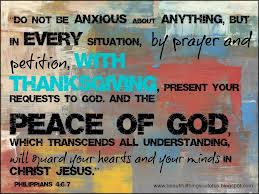
Phillipians 4_6

Philippians 4:6-7

6 Do not be anxious about anything, but in every situation, by prayer and petition, with thanksgiving, present your requests to God. 7 And the peace of God, which transcends all understanding, will guard your hearts and your minds in Christ Jesus.

“Control is for Beginners”

Standard

…Great quote by Deborah Mills-Scofield – Harvard Business Review.

I want to take the thought even further to say controlling managers suck and I’m glad I’m not one. Have you ever noticed how much energy you expend trying to control anything, whether it’s navigating a car on an icy road; crafting with an overzealous glue gun; or even engaging in small talk? The latter usually results in the pain of knowing you overshared with some random person with whom you were just trying to be sociable.

Now imagine controlling managers are spending that same energy ten times over to create a false sense of security for themselves. What could be uglier than that– besides maybe scoring a great sample sale on your favorite designer shoes and discovering one shoe is too tight, or really cheap chocolate that looks delicious until you taste it, or God forbid, dating a stalker who happens to be so adorable that you try to overlook that flaw? There is no beauty in control and there is certainly no art in it.

Control is for Beginners

“When we don’t give people the space to take calculated risks, learn, apply, and iterate, we are really risking our future. While there is a risk to improvising and spontaneity, control brings its own insidious dangers. In our push for perfection, we over-engineer. We add so many bells and whistles that it takes a genius to use the product. Just because we can doesn’t mean we should. Just because we can practice to perfection doesn’t mean that’s best.” -BRENDA MICHELSON

Calling All Dreamers

Standard

Happy Monday to all my #DREAMERS (and you know who you are). Here’s a Monday pick-me-up just in case you have forgotten how fabulous you are. Remember, we aren’t selling our joy and we sure as hell aren’t giving it away for free. I recommend eating chocolate while listening!

Shout out to the original DREAMERS: Char, Diana, Pamela, Freida and Janice as well as my BFF and Honorary Dreamer Barbara Kapp. Mad Love Mondays and Always!

SUNDAY REFLECTIONS

Standard

Genesis 9:12

And God said, “This is the sign of the covenant I am making between me and you and every living creature with you, a covenant for all generations to come.

Take What You Need.3

Authenticity: Your Greatest Leadership Asset

Standard

I am determined to make myself a better leader, and I just may be able to take some of you with me on this journey. I wouldn’t bother if I didn’t always end up in a leadership role in almost every area of my life. I once had a corporate trainer tell me that if you label someone a leader and continue to treat them as such, they will begin to exhibit the traits whether they particularly want the job or not. Obviously, negative labels work the same way. I personally blame my first grade teacher, Mrs. Haynes, for planting this leadership bug in me. The label: Tall kid leads the line. I ran into her at Wal-Mart in Huntsville, Texas a couple of months ago when I was visiting the family and got the chance to tell her how she was still impacting my life today, LOL! She seemed to love that.

How many times have you been at the dinner table with family or friends and the next question is: “What does everybody want to do next?” Some folks just sit there and wait on the answer, and I feel as though they are asking me to decide. So the label of leader sticks with me, and I’ve decided to embrace that role more effectively and authentically. I truly appreciated the following post by Susan Tardanico, and wanted to share it with you.

Authentic Leadership

Susan Tardanico, Contributor
Forbes.com 9/08/2011

Phonies. Have you ever worked for one? They say one thing and do another. They
tell people what they want to hear. Their views morph with popular opinion.
They’re the ones you can’t pin down, and they avoid taking a stand on just
about anything. When we work for someone we deem inauthentic, we do not
willingly support them because we don’t trust them. On the flip side, research
reveals that when we believe a leader is the real deal –- a person of
integrity and character – we are much more likely to go the extra mile and
stand by them in the best and worst of times. With trust in leaders at
all-time lows, it’s time to consider that personal authenticity may be our
greatest leadership asset.

I used to believe that phonies made a conscious decision to hide their true
selves from the rest of the world in a duplicitous identity shell-game. But
after working with leaders for many years, I’ve concluded that only a small
percentage is actually that Machiavellian and that the majority is simply
lost. They don’t know who they are, and nowhere does this become more obvious
than when they’re in a visible leadership role.

Perhaps in all the gymnastics of leadership – the politics, the management
fads and techniques, the expected behaviors imposed on us by our bosses,
organizations and subordinates – we’ve lost ourselves as people. Or maybe
we never really found ourselves to begin with. Leadership guru Warren Bennis
said that letting the self emerge is the essential task of leaders. Indeed,
leadership is, first and foremost, all about you. People often have a
misguided notion that leadership is about everyone else. But if a leader
hasn’t journeyed inside first to get clear on his or her values, strengths,
passion and vision, their lack of authentic grounding will cause them to
behave in inconsistent ways, eroding trust and undermining their leadership
effectiveness.

Curiously, most MBA and leadership development programs barely focus on
the topic of authenticity. There are many assessment tools that help leaders
become more aware of their management style and how they’re perceived, but
most stop short of helping them dig down deep and answer some fundamental
questions about who they are and how it manifests in their leadership. Maybe
there’s an assumption that these questions already have been asked and
answered; that we’ve all heeded the words of the great Socrates who implored
us to “know thyself.” But experience tells us otherwise. Take an informal
polling of your friends and colleagues. Chances are they, like most people,
are unable to answer four basic yet all-important questions: What’s most
important to you? (Core values) What are you good at? (Strengths) What excites
and inspires you? (Passion) What do you want? (Vision).

If you don’t know how to answer some or all of these questions, you’re not
alone. Answering them fully and honestly is not an easy task because it
requires intense introspection. But the payoff can be transformational, giving
you the kind of clarity that enables you to lead your life, lead others and
manage your career with intention, making choices that are more aligned with
who you are, and in the process, gaining the commitment and loyalty of those
around you.

Values
Our values are what we believe and stand for; our convictions about the things we deem to be most important in life. Values are the stuff of our character; the core of what drives and fulfills us. To get clearer on your values, try using the “Values Explorer” tool from the Center for Creative Leadership. To successfully identify your core values, you must suspend your inner judge and set aside what you believe society, your family or anyone else expects of you. If you make choices based on what you should care about – or shouldn’t care about – then you are moving further away from the core of who you are – not closer to it. When identifying your values system, there are no right or wrong choices – just authentic and inauthentic ones. Then, think about how you’re living and leading within the context of your top five values. Ask yourself, “are my values evident in how I behave, the choices I’ve made and the way I communicate? Am I truly using my own voice?”

Strengths
As leaders, job No. 1 is to surround ourselves with the right people; to build
a team with complementary strengths and diverse perspectives. How can we
effectively accomplish this if we don’t understand our own strengths and, in
turn, are able to recognize the strengths in others? Strengths are our innate
talents, the things we’re naturally good at. Business culture has long been
focused on trying to address the weaknesses in people versus unlocking the
potential of their strengths. As women, we tend to focus more intensely on our
weaknesses than men do. This translates into missed opportunity for us as
leaders and organizations.

Passion
Simply put, passion is what jazzes and excites us; what consumes us with
palpable emotion. When we’re engaged in something we’re passionate about,
we tap into a seemingly unending wellspring of energy and resilience.
If you are unclear on what you’re truly passionate about, the best thing you
can do is pay attention. Only you know how you feel as you move through the
circumstances and activities of your life. Where do you find your greatest
joy? In what circumstance do you feel you’re in the zone, in harmony with all
that’s around you, excelling without even trying, filled with unending energy?
Many people feel that when it comes to our work life, having passion is nice
but not necessary. I cannot think of worse drudgery than getting up every day
and doing something you’re not passionate about. Passion is what carries you
through the tough times, helps you inspire others and excel at what you do.

Vision
Our vision is our desired destination; the end-game we’re striving to achieve.
It’s what we want. Writing a personal vision statement is a very powerful,
often life-changing exercise because it focuses, informs and illuminates your
way forward. You describe in vivid terms the ideal picture of all aspects of
your life – career, family, community, health, spirituality — unbounded by
current constraints and circumstance. A good vision answers the questions,
“what do I want to be, do, have, and contribute in life?”

Developing a vision requires you to think big and long-term. Try not to get
caught up in issues of process (how you will get there) – that’s the job of
strategies and tactics. Also, understand that you won’t travel a completely
linear path from current state to the achievement of your vision. Finally,
remember that your vision will evolve over time. The key is to get started!
Leadership may ultimately be about leading and inspiring others, but it begins
inside, with each of us as individuals. Our ability to achieve greatness as
leaders hinges on our ability to know ourselves, know what matters, and act in
accordance with who we are. When we go through the process of exploring
each of these “prongs of authenticity,” we gain inspiring and invigorating
clarity that helps us be exceptional leaders — of our lives and of other
people.