Gorgeous collection for Fall/Winter 2014!


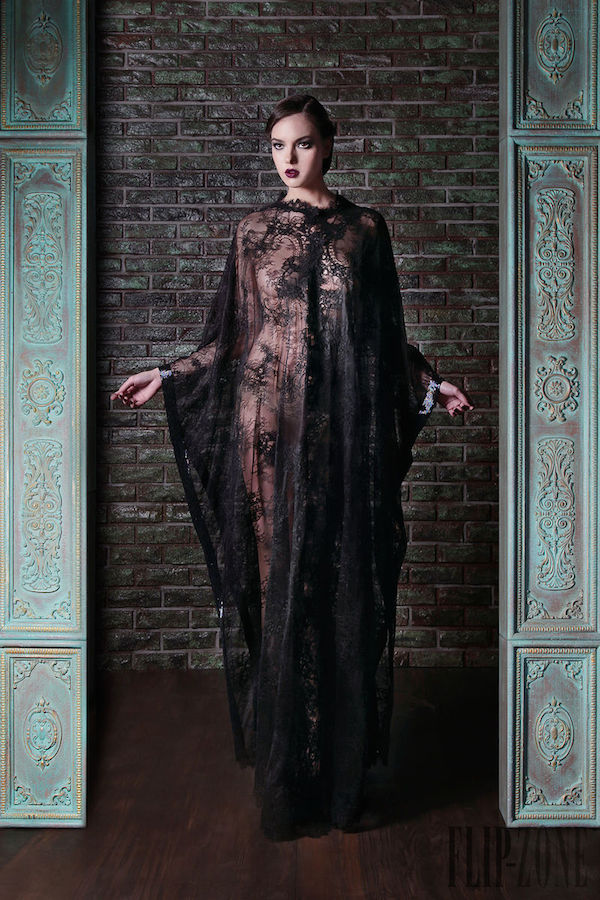


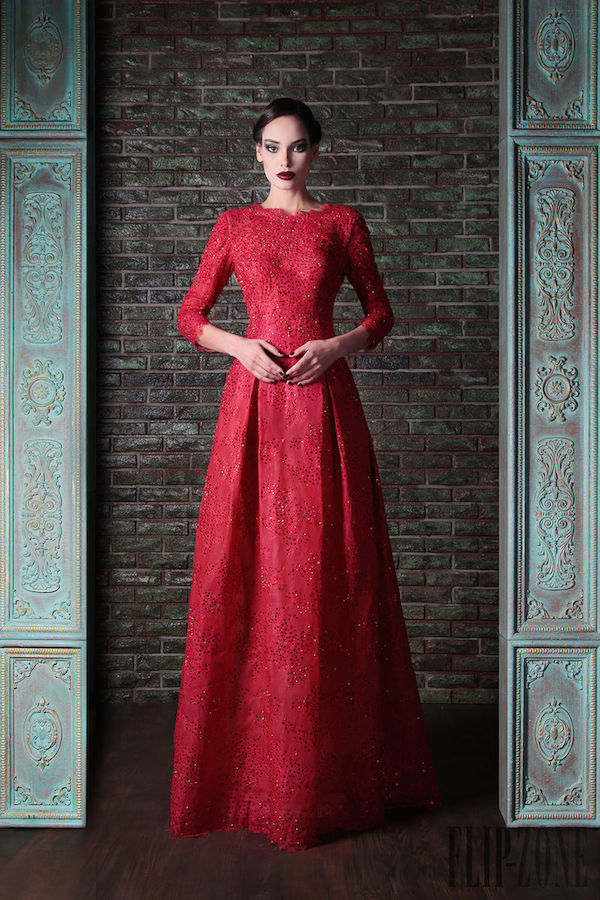
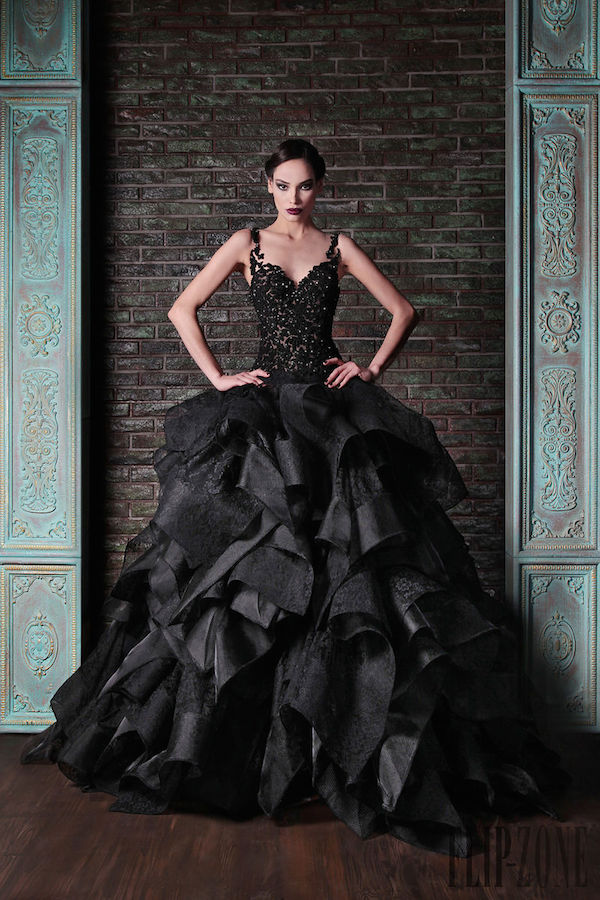
Credit: Style Pantry
Gorgeous collection for Fall/Winter 2014!
Credit: Style Pantry
Nothing better than chocolate and the weekend…
A triple layer of crumbly crust, a truffle-like interior, and an almost patent-leather-shiny glaze make this tart the chicest take on chocolate I’ve come across in a long time.

Yield: Makes 8 to 10 servings Active time: 30 min Total time: 2 3/4 hr (includes cooling)
Ingredients
For crust:
9 (5- by 2 1/4-inch) chocolate graham crackers (not chocolate-covered), finely ground (1 cup)
5 tablespoons unsalted butter, melted
1/4 cup sugar
For filling:
1 1/4 cups heavy cream
9 ounces bittersweet chocolate (not more than 65% cacao if marked), chopped
2 large eggs
1 teaspoon pure vanilla extract
1/4 teaspoon salt
For glaze:
2 tablespoon heavy cream
1 3/4 ounces bittersweet chocolate, finely chopped
1 teaspoon light corn syrup
1 tablespoon warm water
Equipment:
a 9-inch round fluted tart pan (1 inch deep)
Preparation
Make crust:
1. Preheat oven to 350°F with rack in middle.
2. Stir together all ingredients and press evenly onto bottom and 3/4 inch up side of tart pan. Bake until firm, about 10 minutes. Cool on a rack 15 to 20 minutes
Make filling:
1. Bring cream to a boil, then pour over chocolate in a bowl and let stand 5 minutes. Gently stir until smooth. Whisk together eggs, vanilla, and salt in another bowl, then stir into melted chocolate.
2. Pour filling into cooled crust. Bake until filling is set about 3 inches from edge but center is still wobbly, 20 to 25 minutes. (Center will continue to set as tart cools.) Cool completely in pan on rack, about 1 hour.
Make glaze:
1. Bring cream to a boil and remove from heat. Stir in chocolate until smooth. Stir in corn syrup, then warm water
2. Pour glaze onto tart, then tilt and rotate tart so glaze coats top evenly. Let stand until glaze is set, about 1 hour.

A beauty throwback! In 1950s America Helen Williams became the first black female model to break into the fashion mainstream. Born in East Riverton, New Jersey in 1937, she was obsessed with clothes from an early age, and began sewing her own garments at the age of seven. As a teenager she studied dance, drama and art before getting a job as a stylist at a New York photography studio. While there she was spotted on separate occasions by Lena Horne and Sammy Davis Jr, who happened to be in the studio doing press shots. Struck by her beauty, they urged her to take up modeling. She was seventeen.
With her trademark bouffant wig, sculpted eyebrows and long, giraffe-like neck, she worked exclusively for African American magazines such as Ebony and Jet. These early years were tough, as not only did beauty’s apartheid system exclude all non-white models from mainstream fashion, but within the black modeling scene itself, the girls were required to be light-skinned, just like the African American chorus girls of the 1920s. “I was too dark to be accepted,” she recalled.
But that was America. The French, by contrast, held a very different view, and by 1960 she’d moved to Paris. “Over there I was ‘La Belle Americaine,’” she said. She modelled in the ateliers of designers Christian Dior and Jean Dessès. By the end of her tenure she was making $7,500 a year working part-time, and she’d received three marriage proposals from French admirers, one of whom kissed her feet and murmured, “I worship the ground you walk on, mademoiselle.”
After Paris she returned to America, where things had not changed at all for dark-skinned models. While searching for a new agent in New York City, she once waited two hours in the reception of one agency, only to be told that they had “one black model already, thanks.” But Williams never-say-die attitude meant that she would not take no for an answer. “I was pushy and positive,” she said. Undeterred at being rejected, the young beauty took her case to the press. Influential white journalists Dorothy Kilgallen and Earl Wilson took up her cause, drawing attention to beauty’s continuing exclusion of black models. This opened things up for Williams, who was then booked for a flurry of ads for brands such as Budweiser, Loom Togs and Modess, which crossed over for the first time into the mainstream press, in titles such as The New York Times, Life and Redbook. By 1961 her hourly rate had shot up to $100 an hour. Fashion’s lily-white membrane had finally been breached.
It was a pivotal moment for black beauty, as Williams’s success broke the tradition for only using light-skinned models. “Elitists in our group would laugh at somebody if they were totally black,” said model-turned-agent Ophelia DeVore. “And when she [Williams] came along she was very self-conscious because she was dark. She gave people who were Black the opportunity to know that if they applied themselves they could reach certain goals.” Williams was the first beauty to break the four hundred year chain that had branded dark skin as ugly. The same dark skin that was rendered second-class during slavery, that the minstrels once ridiculed, and that had relegated Hollywood’s actors to roles as servants and clowns, was suddenly beautiful.
Credit: Lipstick Alley
Africa Fashion Week London (AFWL), The most sought after African Inspired Fashion Event in the UK is back for the 4th Season in August 2014. Following a fabulous season 3 AFWL 2013 at the Old Truman Brewery in Shoreditch and the grand finale at the Dorchester Hotel in Park Lane.

I love this African label. ZUVAA, a new community for African Fashion – Founded in 2013 by US-based entrepreneur Kelechi Anyadiegwu, ZUVAA is a new online store that showcases African inspired fashion from all over the world. Zuvaa comes from the Shona language of Zimbabwe and means ‘sunshine.’ ‘Zuvaa’ represents the vibrant and positive spirit of the continent of Africa and how you let your personal light shine.


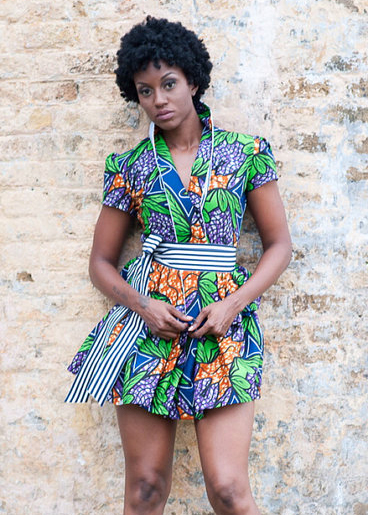

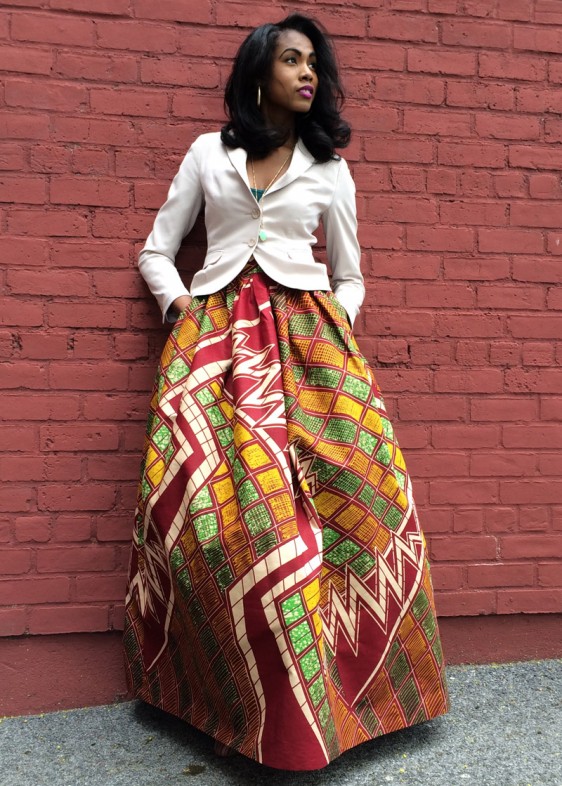

Credit: New African Woman Magazine
The Alexander McQueen resort 2015 collection features clean lines and structure while pulling some inspiration from vintage kimonos and men’s wear fabrics. Love it. Enjoy!


Credit: Style Pantry
Flan can be terribly intimidating – chocolate cake topped with flan takes it to another level of intimidation! But this Chocolate Caramel Turtle Flan really could not be any easier and is pretty foolproof.

Ingredients
For the cake:
1 cup dulce de leche
3/4 cup butter, softened
1 cup sugar
1 whole egg
3/4 cup flour
1 cup cake flour
3/4 teaspoon baking powder
3/4 teaspoon baking soda
1/3 cup plus 2 tablespoons cocoa powder
1 teaspoon ground cinnamon
1 cup plus 2 tablespoons buttermilk
For the flan:
1 (14 ounce) can sweetened condensed milk
1 (12 ounce) can evaporated milk
4 whole eggs
1 teaspoon vanilla extract
1 teaspoon coconut extract
Cake toppings:
1 cup dulce de leche
1/2 cup finely chopped pecans
Directions
1. Preheat oven to 350 degrees F and position oven rack to the middle. Generously butter a 10-inch Bundt pan and sprinkle with flour or use Baker's Joy cooking spray. Tip the pan and tap out excess flour. Warm the dulce de leche a little bit to soften it and pour it over the bottom of pan to coat evenly.
2. For the cake: In a large bowl, beat the butter and sugar with an electric mixer at medium-high speed until light in color. Scrape the bowl. Beat in the egg. Sift together the flour, cake flour, baking powder, baking soda, cinnamon, and cocoa. With the mixer on medium-low, beat in about 1/2 of flour mixture, followed by 1/2 of buttermilk. Repeat. Scrape bowl, then raise the speed to medium-high and beat for 1 minute. Pour batter into the Bundt pan and spread evenly.
3. For the flan: In a blender combine the sweetened condensed milk and evaporated milk, the eggs and both extracts. Blend until smooth.
4. Slowly pour the flan mixture over cake batter. Pull out the oven rack, set the cake into larger pan, then set both pans on rack. Pour 6 cups of hot water around the cake. Carefully slide the pans into the oven and bake for about 50 to 55 minutes or until a toothpick comes out clean. Remove from the water bath and cool at room temperature for 1 hour.
5. Refrigerate cake for several hours or overnight. Carefully run a thin bladed knife around the edge of the cake to free the edges. Invert a rimmed serving platter or large plate over the cake pan, grasp the two tightly together, then turn them upside down. Gently jiggle the pan back and forth and let the cake release and drop.
6. Drizzle the reserved cup of dulce de leche over the cake and sprinkle with pecans. Slice and serve.
Designers Tamara and Natasha Surguladze are Georgian-born identical twins, who arrived in London in 1996 to study design at Central St Martin’s and in 2000 Barneys NYC dedicated a wall to their awe-inspiring graduation collection. The Tata-Naka statement pieces regularly starred in the legendary series ‘’Sex in the City’’ and were worn by Carrie Bradshaw on the cover of the official book.

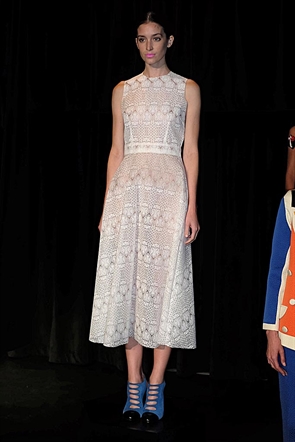
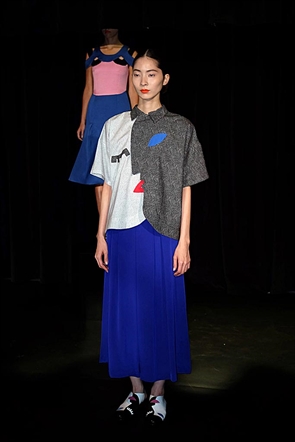


Credit: londonfashionweek.co.uk
#FashionfriendsofTenaciousM… Gorgeous capsule collection from Dsquared2 for resort 2015. Love!
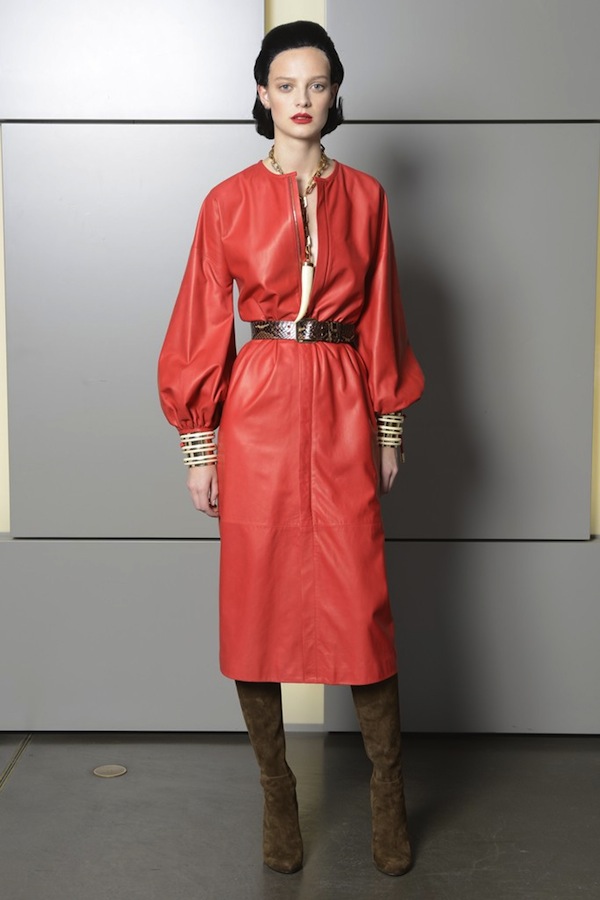
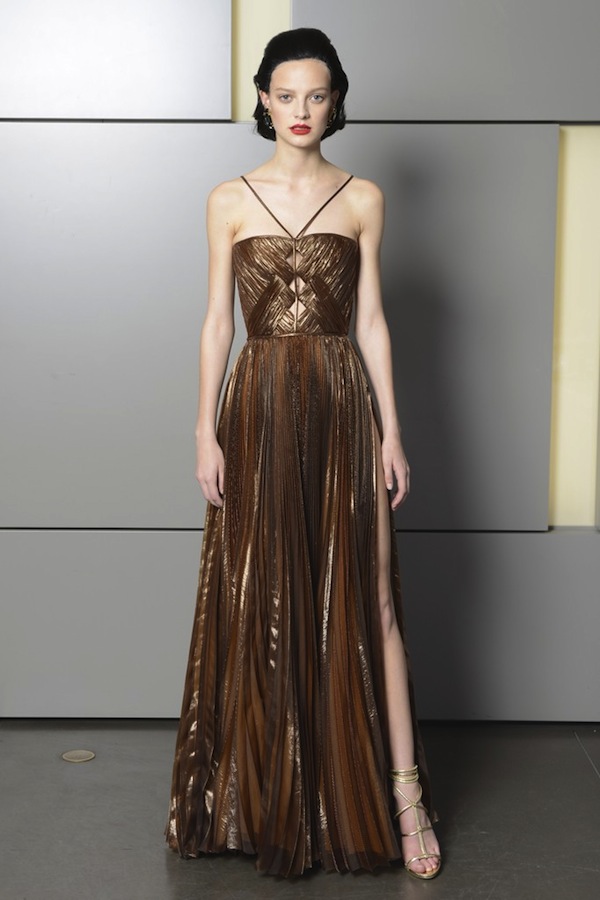

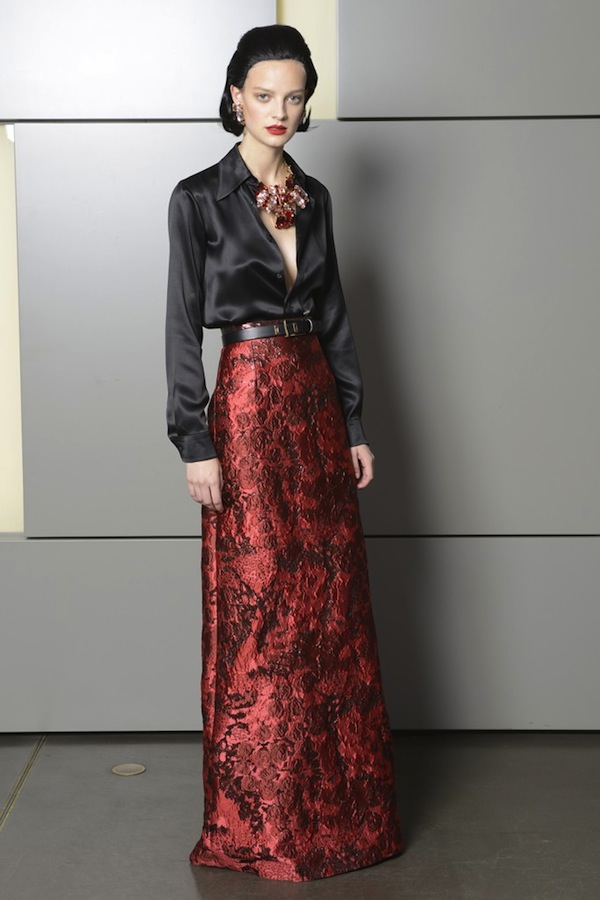
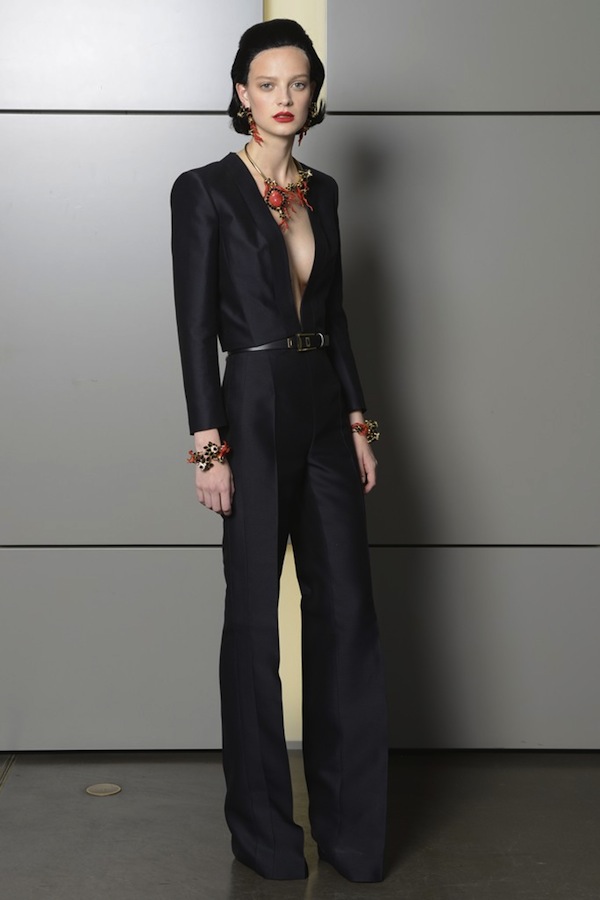

Credit: Style Pantry
Full of rich, deeply chocolate flavor, you’d never guess it’s the olive oil that gives this cake such moistness and character. You can use a stencil design to dust the cake with confectioners’ sugar, or if you have a favorite chocolate frosting, feel free to use it here. Be sure your 8-inch cake pan is at least 2 inches high; the batter almost fills it. The cake keeps at room temperature for up to four days, but it will disappear much sooner than that.

Serves 8 to 10
Ingredients
Olive oil and flour for the pan
1-1/4 oz. (1/2 cup) Dutch-processed cocoa powder (I use Droste)
1 tsp. vanilla extract
1/2 tsp. almond extract
4-1/2 oz. (1 cup) all-purpose flour
1/4 tsp. salt
1/4 tsp. baking soda
3 large eggs plus 1 egg yolk, at room temperature
2/3 cup olive oil
1-1/3 cups sugar
1/4 cup confectioners’ sugar for dusting
Preparation
1. Position a rack in the middle of the oven. Heat the oven to 325°F. Generously oil an 8×2-inch round cake pan (or an 8-1/2-inch springform pan) with olive oil and line the bottom of the pan with parchment or waxed paper. Oil the paper and dust it lightly with flour.
2. In a small saucepan, boil about 1/2 cup of water. Meanwhile, sift the cocoa powder through a strainer over a small bowl. Stir 6 Tbs. of the boiling water into the cocoa until it’s smooth and glossy (if the mixture is very thick, you can add as much as 2 Tbs. more boiling water; when I tried this cake with Hershey’s cocoa, I needed to do this). Stir in the vanilla and almond extracts. Set aside to cool slightly. In another small bowl, mix together the flour, salt, and baking soda and set aside.
3. In the bowl of a stand mixer, combine the eggs and yolk, olive oil, and sugar. Using the whisk attachment, beat on medium-high speed until thick, lemon colored, and creamy, 2 to 3 minutes, scraping down the sides of the bowl. Reduce the speed to low and gradually add the warm (not hot) cocoa mixture until it’s well combined, scraping down the sides of the bowl once. Gradually mix in the dry ingredients until just combined, scraping down the sides of the bowl.
4. Pour the batter into the prepared cake pan and bake in the center of the oven until a toothpick comes out with a few moist crumbs clinging to it but with no wet batter, 55 to 60 minutes. Put the pan on a rack and carefully run a paring knife around the inside edge to release the cake. Let cool for 10 minutes. Using a second rack to sandwich the cake pan, flip the pan over. Carefully lift the pan from the cake, gently peel off and discard the paper liner, and let the cake cool completely.
5. Before serving, dust the top of the cake with confectioners’ sugar. To use a stencil pattern, use the flat side of the cake for a more level surface (the cake may dip slightly in the center; if that’s the case, you’ll get a cleaner design with a pattern that keeps close to the perimeter).
 Egos & Buffaloes